ACL
Why the ACL matters
Helps control forward movement of the tibia and contributes to rotational stability.
Why it matters in SAFE ACL
BEST ACL SURGEON DELHI
HOD Orthopaedics — Fortis C-DOC, New Delhi
1000+ ACL Surgeries
FIFA Diploma in Football Medicine
17+ Years Experience
Knee illustration with the ACL highlighted in orange. The PCL and other structures remain blue.
SAFE ACL™
Different knees may need different treatment plans. Dr Sankalp Pande's SAFE ACL chooses the technique that fits your knee — and builds the recovery plan around you.
ACL Reconstruction + Lateral Extra-Articular Tenodesis
 ACL and meniscus tear: what surgery and recovery should I expect?An ACL tear with a meniscus tear is treatable with one keyhole surgery that reconstructs the ACL and, where possible, repairs the meniscus, followed by step-by-step rehabilitation starting with knee exercises from day 1.
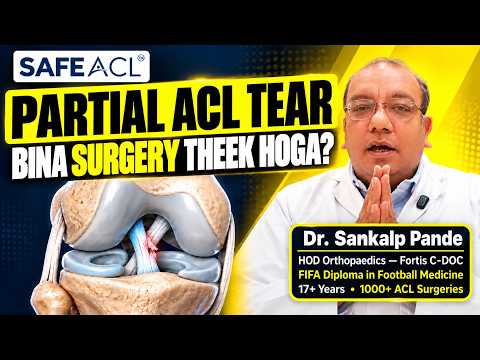 Partial ACL tear: does it need surgery?Not every partial ACL tear needs surgery.
 Which ACL surgery technique is right for my knee?The right ACL surgery technique is the one your knee actually needs, not the one with the fanciest name or the highest price.
 What does ACL surgery cost depend on, and is costlier better?ACL surgery cost depends on the choice of hospital, room category, surgical team, choice of implants and the actual complexity of the injury, and a costlier surgery is not necessarily better.
We identify factors that can increase the chance of another ACL tear and plan treatment accordingly.
Your age, work, activity, sport, knee injury and recovery needs help us decide your ACL plan.
A planned recovery pathway focused on getting you back to walking, work, driving, gym, running and sport.
We look beyond the ACL itself, including meniscus damage, cartilage damage and other knee injuries when planning treatment.
We follow your injury and recovery to help plan your treatment, recovery speed and when your knee may be ready for sports.
Orthopaedic Surgeon · MBBS, MS (Orthopaedics) · DMC Reg. No. 63585
Eligible cashless patients don't need to arrange an initial hospital deposit for treatment through us.
We coordinate with your insurer and the hospital to keep deductions to a minimum and explain expected deductions before admission.
Our team assists with cashless approval, hospital admission and insurance paperwork.
SAFE ACL
An ACL injury may involve more than one structure. Tap a button to see why each part matters in treatment planning.
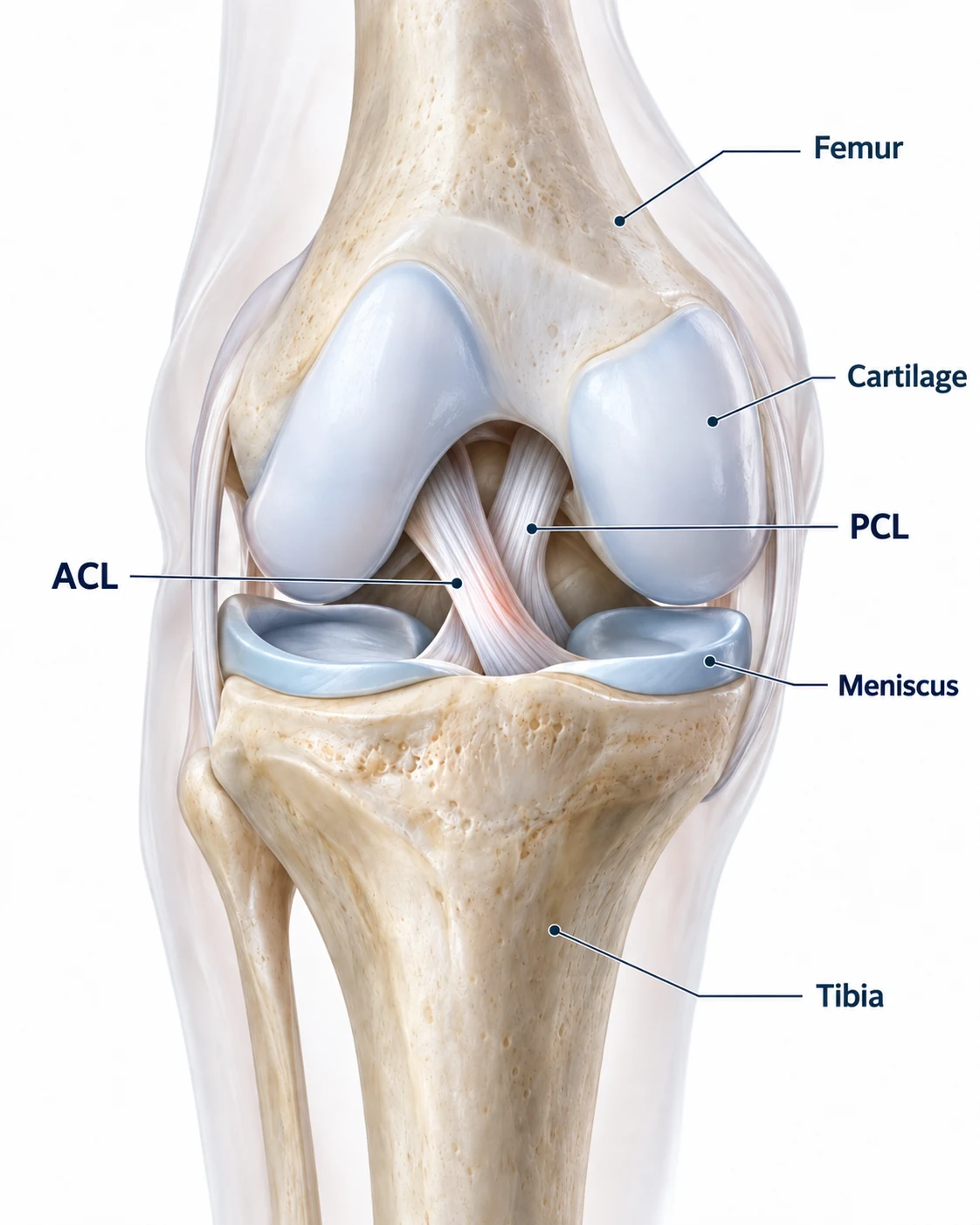
Helps control forward movement of the tibia and contributes to rotational stability.
Nobody wants to go through ACL surgery and months of rehabilitation all over again.
Walking, gym, running, sports training and competitive sport are different stages of recovery. Two patients who have surgery on the same day may not be ready for every activity on the same day.
A study found that young athletes who returned to demanding sports before 9 months had about 7 times higher risk of another ACL injury.
But time alone is not enough. More recent research shows that athletes who complete rehabilitation and pass proper return-to-sport tests may be ready earlier.
Returning to sports too early can increase the chance of another ACL injury. SAFE ACL follows your recovery and helps decide when your knee is ready for sports.
Source: Beischer et al., 2020, Journal of Orthopaedic & Sports Physical Therapy (JOSPT).
A completely torn ACL does not reliably reattach and heal by itself. Partial tears sometimes stabilise well enough with rehabilitation, which is why grading matters.
Very possibly. Walking straight uses little rotational control. Instability often becomes more obvious with turning, pivoting or changes of direction.
No. Some partial tears and selected patients with lower pivoting demands may do well with structured rehabilitation. The decision depends on knee stability, age, activity, associated injuries and your goals.
Usually after swelling settles and the knee regains good movement. The timing should be planned for your knee rather than choosing surgery simply because it can be done quickly.
Not necessarily. Clinical examination is important for diagnosing instability. MRI helps assess the ACL tear and associated meniscus, cartilage or other ligament injuries.
There is no single best graft for every patient. Hamstring, BPTB and quadriceps grafts each have advantages and trade-offs. Choice should consider age, sport, occupation, knee findings and goals.
A meniscus tear can change both the operation and the rehabilitation plan. When appropriate, preserving and repairing the meniscus is considered because it contributes to knee function and protection.
LET or ALL procedures may be considered as additional protection in selected higher-risk knees. They are not required for every ACL reconstruction; the decision depends on your risk factors.
No. Internal bracing or augmentation is not automatically needed in every ACL case. Whether any additional procedure is useful depends on the tear pattern, tissue, stability and your activity demands.
Most patients begin walking with support very early after surgery. The exact progression depends on the procedure performed, and meniscus repair or other associated procedures may change weight-bearing.
These are milestone-based decisions. Progress depends on pain, swelling, knee movement, strength, the type of work you do and whether other procedures such as meniscus repair were performed.
Driving should resume when you have adequate control of the leg and can operate the vehicle safely. The side of surgery, automatic versus manual transmission and the demands of long driving also matter.
Gym and running are introduced progressively after adequate movement, strength and control are regained. The timeline varies and should follow rehabilitation milestones rather than a fixed date.
Return to sport should be based on recovery of strength, movement quality, functional testing and sport-specific readiness — not simply the number of months since surgery.
Physiotherapy is a major part of ACL recovery. Regular rehabilitation helps restore movement, strength, control and confidence and is important for a safe return to daily activities and sport.
Yes, re-tear can occur. Risk varies with age, sport, knee characteristics, rehabilitation and return-to-sport demands. The SAFE ACL plan assesses these factors and aims to reduce avoidable risk.
Cost varies with the hospital, graft and implants, associated procedures such as meniscus repair, room category and insurance coverage. A specific estimate is more useful than one fixed price for every ACL case.
ACL reconstruction is commonly covered when medically indicated, but approval and exact coverage depend on the insurance policy and hospital authorisation. Eligibility should be checked before admission.